Apparently I'm Not a Prepper -- Lessons From a Short Blackout
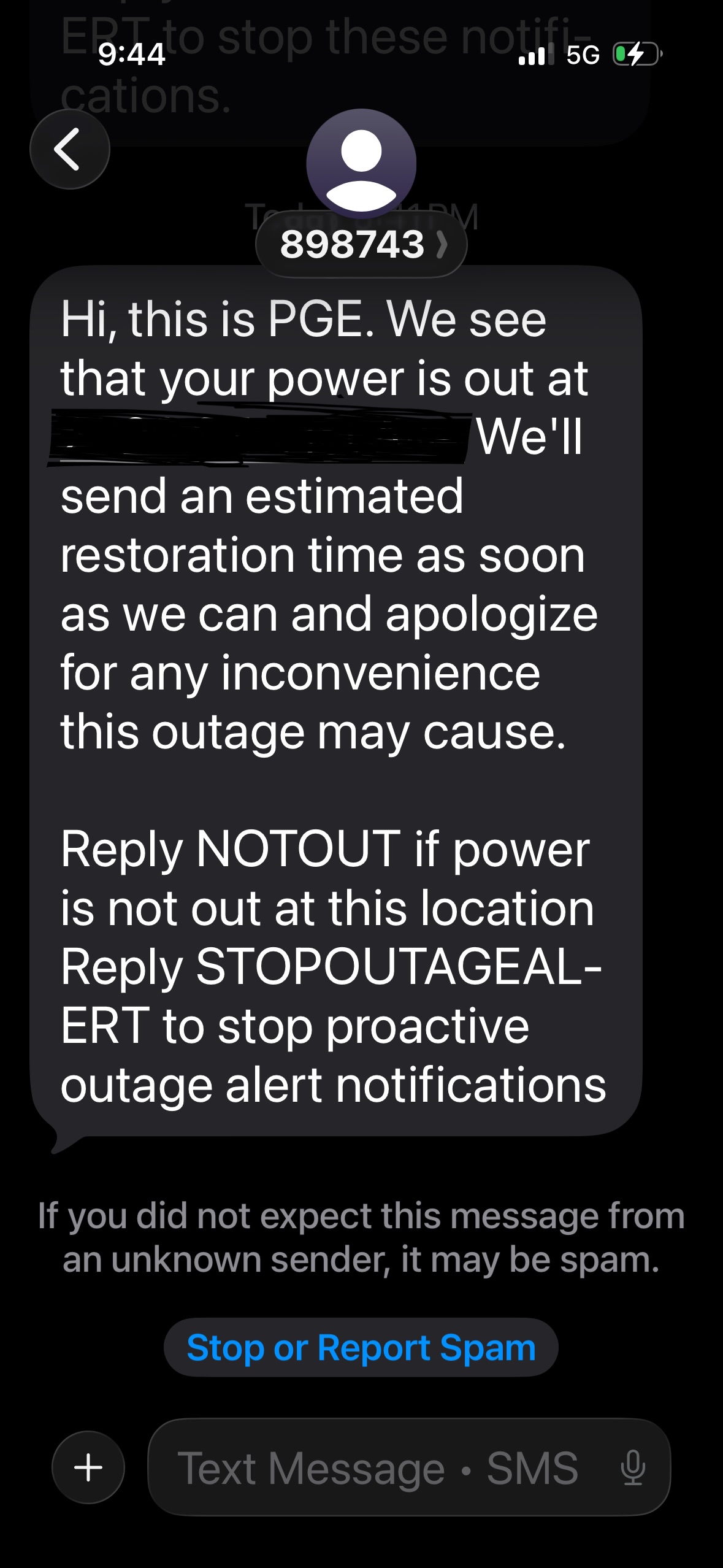
Last night went a little differently that I'd planned, because (as you can see) we lost electricity at 9:30 P.M. The blackout did seem to be localized, as I could see that houses a couple blocks over were fully illuminated. This gave me a sense of calm.
My husband was at hockey, (he plays on Saturday nights) so it was just my daughter and I suddenly sitting in the dark while an atmospheric river raged above the house.
I was not prepared. As you can see in the above screenshot, my phone was at maybe 30%, so I was hesitant to use the flashlight function for more than a minute at a time. I do have the pillar candle that I thrifted last month, so I grabbed it from one location and the matches from another spot. (Note to self -- emergency candles and matches should be stored in the same place!) However, my daughter's cat is still at the house and I don't trust her to abstain from knocking it over.
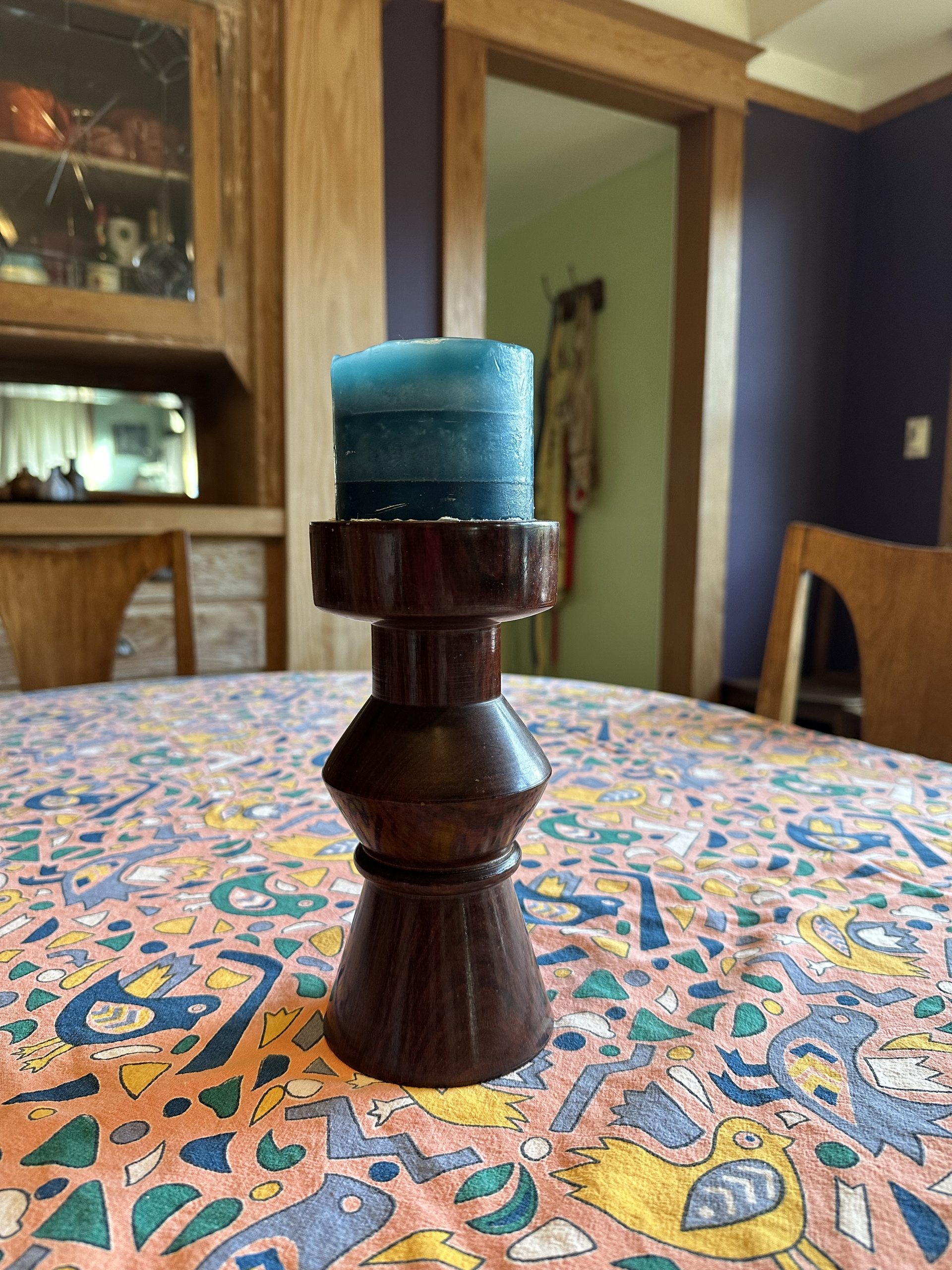
Also . . . a single candle is not a plan.
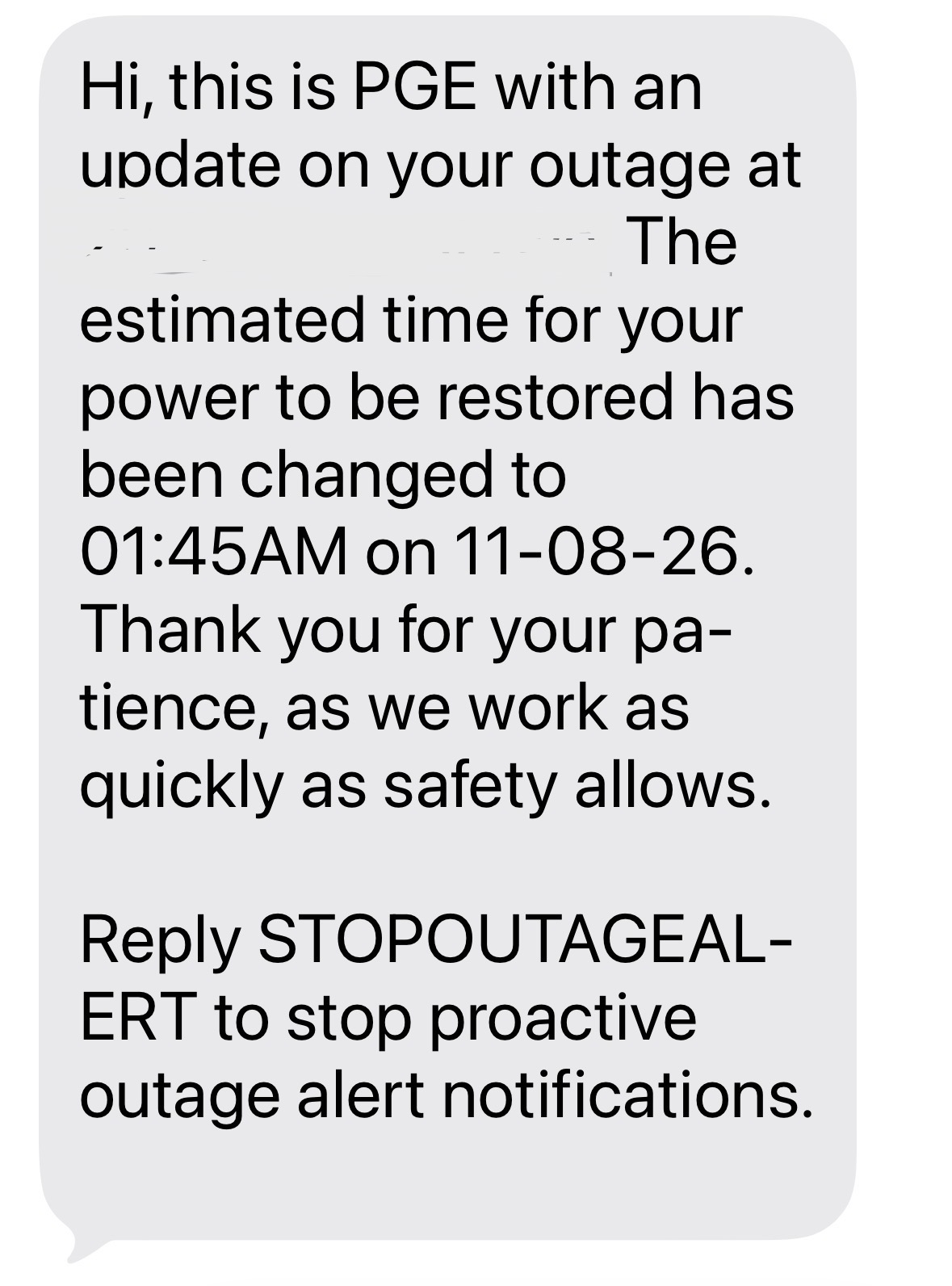
Portland General Electric was great with their communication which helped.
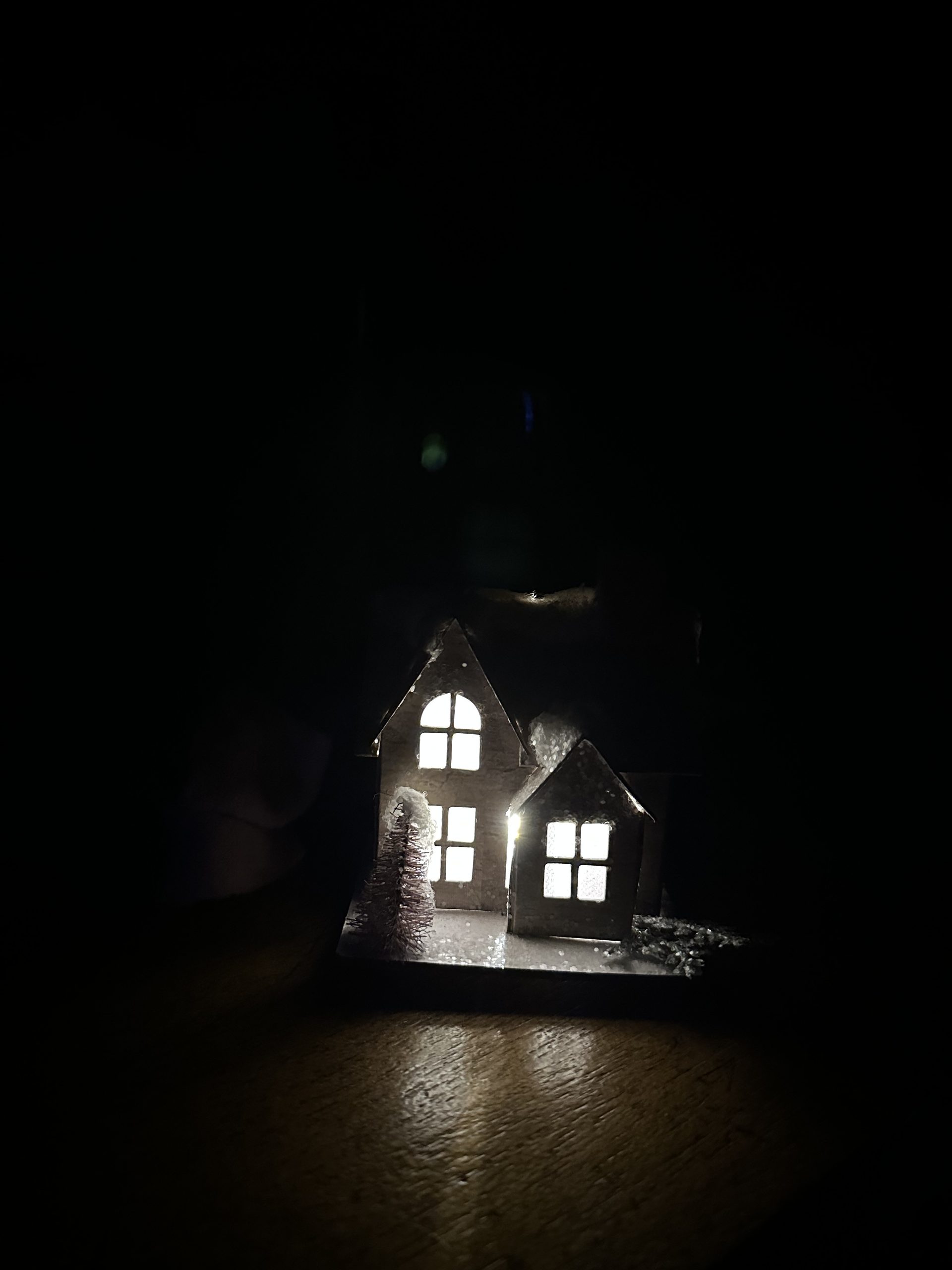
I remembered that I had this battery operated Christmas ornament is an easy to find spot, which I decided would make the perfect night light.
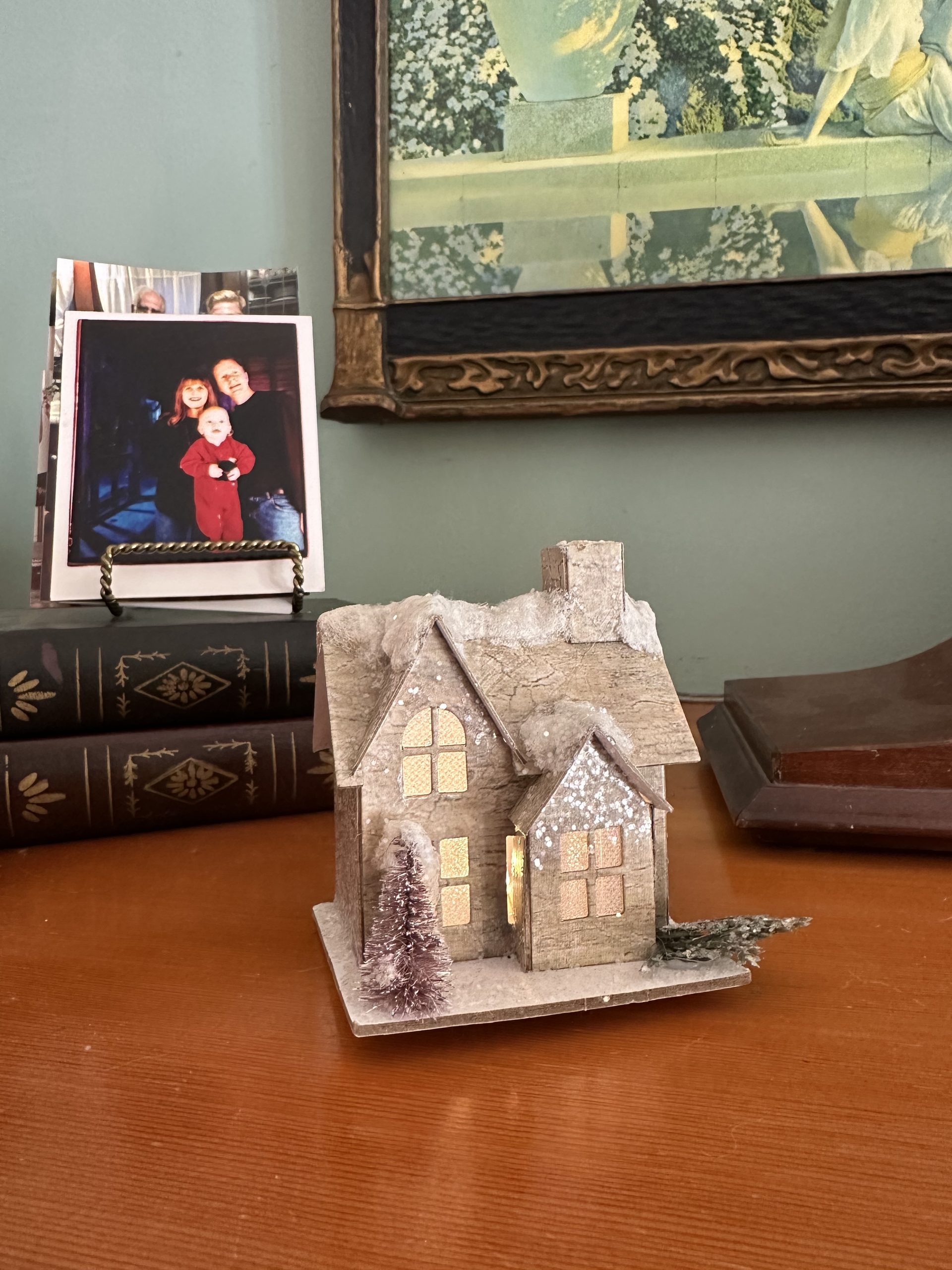
Here's what it looks like in the daytime.
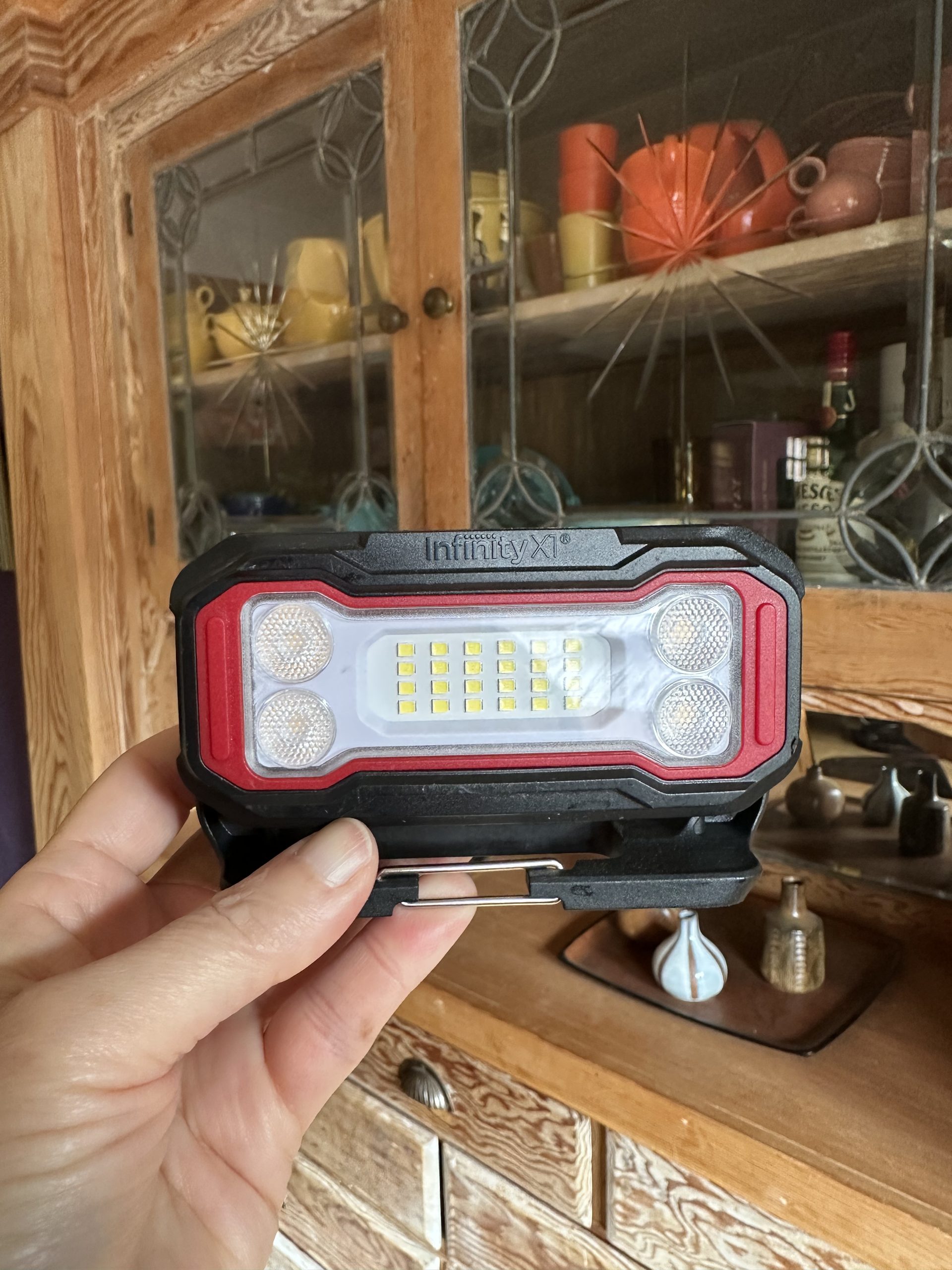
I also grabbed three plug-in rechargeable LED work lights from the basement, which are super powerful and put out a remarkable amount of illumination. However, much as they are handy for a short blackout, they're essentially useless for longer periods as they require electricity to recharge.
We do have a couple battery powered flashlights, but they're scattered throughout the house and it's been years since I've tested them.
I also tidied things up a little bit to minimize potential tripping hazards.
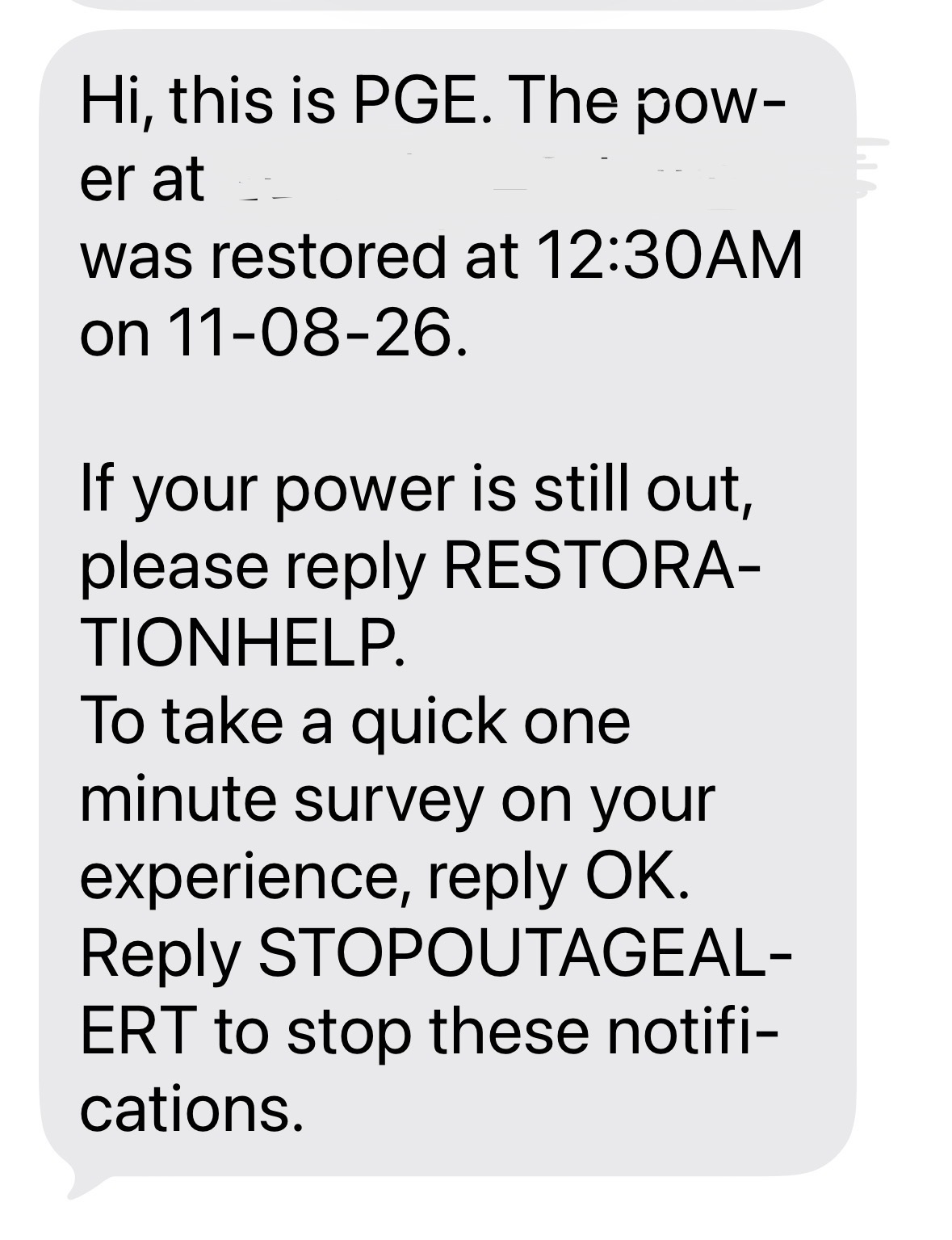
Luckily our experience without electricity lasted a mere three hours. Nothing really in the long run. A blip.
Portland, Oregon rarely gets dramatic weather, so I've been amiss at putting together emergency supplies. I feel like this was an important reminder that our emergency plan shouldn't hinge on one candle and a Christmas ornament.
I'd love to get your advice on what we need to do to prepare ourselves for future outages. Please share your ideas and experiences in the comments section below.
Katy Wolk-Stanley
"Use it up, wear it out, make it do or do without."
Click HERE to follow The Non-Consumer Advocate on Instagram.
Click HERE to join The Non-Consumer Advocate Facebook group.


Wow, lucky you get a text message. I might suggest it to the power companies in NZ.
Bad storms/multiple day outages happen at least once a year where we are, so we're what we jokingly call "prepper-lite."
Rechargeable/battery-powered sconces throughout the house
Hurricane lamps and oil for the same
Ice packs in the deep freezer and fridge freezer to maintain temperature
A giant rechargeable power bank capable of running our (small, no frills) fridge
Bottled water for us and the cats
Easy/no cook food for us and the cats
A 1950s gas stove that uses NO electricity, so we can still cook and have the comfort of coffee no matter what--we sought out an older stove for just this reason!
A dead-simple gas furnace with a battery back up for the thermostat, so we're not without heat, either
Batteries and powerbanks
I am seriously shocked this was novel to you. But I grew up in a house located where power outages were frequent and several serious earthquake faults are common. So this was really a good lesson for me. Clearly you have never known anyone who had to walk down 30 flights post earthquake/electrical outage........
Look into earthquake preparedness instructions. Portland is on a major fault line!!!
Like the MADRID FAULT IN MIDWEST that people ignore and instead talk about San Andres in CA which is equally real. So yes. Battery operated light. Quake supplies of water, foods, first aid (which I bet you do have covered), warmth and sanitation supplies are basic categories for starters. Also the equipment and knowledge to control water and gas and electric lines and thereby reduce some fire issues. Keep gas in car too though for the earthquake assume bridges will be down and have a family plan for emergencies on where to meet up and really one should have two locations in case #1 has problems. It is like fire exits from your home or any other building/place you might be in. If need be read TILT by Sally Hepworth to raise your Portland awareness........ EASY READING, light fiction.
We live on the Madrid fault and have been through a couple of very minor quakes, but there's not much we can do beyond basic preparedness. Most of us will be safer out of our homes during a quake.
One of the most important prep tips is to train your animals to come to the front door for a treat. Do it during storms as well so they're accustomed to upset.
We do have frequent short outages and have been through two that were five days. Any longer might be difficult, but these were wonderful - neighbors around fire pits playing music and cooking out. We also have a 1950s gas stove that's connected to city gas but can be easily converted to LP. I'll be able to pressure can anything that's coming to temp, and we have plenty of foods that are canned or quick to cook. Food prep is just pantry shopping, which I've been doing forever - buy what you really eat when it's discounted, and be sure to rotate.
We have plug-in LEDs with a battery backup that turn on automatically when the electric stops, and both rechargeable and alkaline batteries. All the extras are in a shoe bag on the basement door along with other difficult to categorize schmutz.
Our jumpstarters for the car are recharged monthly and can take an extension cord. Not enough for the fridge or heaters, but phones, laptop, wifi. Our existing boiler could be converted to a battery starter if needed (my husband knows HVAC), and we'll be converting it to a more efficient one with battery backup.
We also live in the NEW Madrid seismic zone, and same, we do know there's a potential for a big quake. We aren't really prepared, it's a good suggestion to get more prepared. We do have supplies for power outages, including a screened tent we can sleep in if power is out in summer overnight.
And the New Madrid seismic zone has reached as far north in IL less than 3 miles from WI. Small tremor, just enough to feel but a tremor no less.
I want a whole house generator (neither neighbor is close), better half is looking into some unit made in Fru-gal Lisa's now blue state. It is new (one strike) and we'd be required to be on metered electric (two strikes). So for now, we'll switch to an electric start generator (we're not getting any younger) and sell our existing generator. Enough power when we switch over to run freezer, frig, well (that is a big one) plus some amenities. Won't do the A/C but that is the least of our worries since we have a basement.
For soft ambient light, where you don't need strong task lighting, I keep my mostly-drained batteries together in one spot, and put them in electric candles. They are nice to lift the gloom of early dusk in fall and winter, and as emergency extra light.
There's a hack that campers use: if you have a headlamp but want room light, strap the headlamp facing a gallon milk jug filled with water. It creates bright clear ambient light for a room.
Solar chargers for your phones are good gifts for family members.
Solar charges for the phone and iPad and my number one necessity communication is very high ranking, I’m 78 and I know my family would panic if anything happened iand they couldn’t contact me, and I certainly wouldn’t want them to be driving around looking for me in an emergency situation. The headlamp milk jug is very useful. I gifted family members headlamps for their emergency kits ,a small gas camping stove and a good supply of the cans to fuel them is another very useful item. Sealed wraps keep for a good six months in the pantry and take up very little space ,much better than filling the freezer with bulky loaves of bread, can be used as pizza bases etc ,just remember to rotate them. Knowing in advance if there’s a dry ice facility in your area is very useful as this lasts really well,I keep gaps in my freezer packed with 3/4 full bottles and cartons of water.. in a power outage these turn your fridge into a giant ice box. Handy if you’re in a situation where water supplies are compromised.I’ve kept food frozen for several days in this way .if you have an essential medication needs. It’s worth always keeping a months supply at hand as they may be difficult to access during an emergency.
In 2017, raging wildfires and subsequent power shutoffs took us all by surprise here in Sonoma County, CA. But we've mostly learned our lesson and now keep a better supply of supplies on hand, including a mix of candles (all housed in one central location; though your post is a reminder that I need to restock), lighters, matches, camping supplies including headlamps, rechargeable lanterns and lights, and a gas camp stove. We have gas appliances as well, and as bad as they are for the environment, we have been slow to replace them because 1) they all still work, and 2) they are useful in power outages.
Also, a purchase I can recommend and have used many times over is a Jackery power station. We have the 300Wh capacity, I believe. Keeping it charged and ready for such an emergency is key, and we use it mainly to keep phones powered up, but I've also used it for an electric blanket during a particularly cold night. We also use the Jackery for camping and road trips, so I always try to remember to recharge it when we return home.
Hope this is helpful!
We have a Jackery as well. It was an expensive initial outlay but it gives peace of mind. It’s also portable so we take it camping for phone recharges and if the weather is hot, it runs a small fan to keep the air moving.
I have lived in the country for 55+ yrs and still find my pepper skills lacking. Last month we were without power and water for 7 hours. I had bought the screw in light bulbs that self charge until the power breaks, then they turn on. I also have led mini lanterns, a magnetic rechargeable flashlight and one of those wind up radios that you can also charge a phone. I have 3 power banks, one that is integrated with my go bag and one that is strong enough to charge my truck battery. My jbl Bluetooth speaker is also a powerbank.
I have 3 carboys with filtered spring water and several rain collection barrels for non drinking water. Most of this equipment is for off grid or dry camping.
I also have emergency flashlights that are plugged in and turn on automatically in the guest rooms. Plus my chore headlamps, most useful and has 5 modes, great to read by. I lost some huge oak branches in the gusts last night.
Rechargeable lights, lanterns and flashlights are our go to items as power packs can recharge them, along with your phone, if need be. We also have candles that we put in bathrooms at the mirror to reflect light but are safe as they are pushed back. Our stove is gas but we can light the burners manually to cook/ heat water. We also have a bbq with a side burner and 2 camp stoves we could use. And, finally, we have a dual fuel generator and 4 propane tanks to run the fridge and electric blankets, if needed.
Generator. Honestly, because you never know when the power company will *not* deliver on their promises. We use a generator to run our fridge, so we've never lost food during an outage. When the remnants of a hurricane reached us in the form of a windstorm in 2008, we were without power for a week. At that time, we didn't have a generator but DH remembered he had a power converter at work, and he got it and used it to convert the DC power of our car battery to AC to run our fridges and a hot plate. Everyone on our street lost all the food in their freezers and fridges, but we were fine. Thankfully it was nice weather (after the windstorm) so we didn't have to worry about either sweltering or freezing.
We keep flashlights in everybody's bedrooms, and electric candles (have several battery chargers stocked with the necessary batteries). I also do not trust regular candles any more, not with a cat around! Power banks on hand for cell phones--which reminds me, I need to charge my power bank!
We usually have several week's worth of canned tuna, oats, and rice--these are staples for us, and we buy them in bulk. And DH keeps lots of blue ice frozen in the freezer, just in case we need to toss them in a cooler with food should the generators not be working.
I have a ph car charger and keep my car on 3/4th full. Flashlights, solar cooker, sleeping bag, flashlights, peanut butter, bread crackers, tuna, dried fruit like prunes, mangoes , dates. Bottled water enough for four days. Had a hurricane hit that was still a category 1 at 74 mph and brought neighbor’s tree down on my roof ( I am inland) and town was without power a couple of days.
I just love that tablecloth, btw.
Thanks, it's from Goodwill.
Three hours! That's such a short time. But good as a reminder of what you need to be prepared for. I once lost power for more than a week due to an ice storm. Several times I've lost power almost that long. The Midwest is a stormy place.
I have a basket holding my portable charger and my flashlight and candles all bundled together in a closet. My matches aren't there, but I know where they are.
A good tip if you are afraid of losing food is that you can buy bags of ice at McDonald's and Burger King. And our Walgreens always has ice, too.
I have several things that look like light switches from dollar tree. They use 2 AA batteries and put out an amazing amount of light.
One consideration is whether you need light to actually see and do things, or light to keep from running in to the walls when you move around.
My son's toys had many more light-up components than I expected, once I started looking at them.
I have an LED lantern that I keep in the same spot in case of a power outage. It also can charge your phone. I have candles, lighters and flashlights stored in the same bin. I also have a hand crank emergency radio. I have water stored in canning jars. I do have a generator that I've learned to hook up myself after losing my husband. I have lost power many, many times and several times for multiple days to a week.
From the predictions on the news (enter grain of salt) it looks like the PNW is going to get hammered in several different waves over the next couple of weeks. Whee!
My tips are whenever you empty a large plastic secure food safe container, fill with water and freeze if you have extra room in your deep freezer. Once frozen solid, they will take up space and reduce running of the freezer plus if there is an extended power outage, you can move them to the standard refrigerator and freezer for extra cooling as long as there is room/you can safely open briefly to shove in and shut the door.
A valuable asset while unpleasant to most interior decorators is a flash light that plugs in in a hallway. Hallways because they are generally easy to navigate and simply grab the flashlight, no digging necessary.
I know you're a library fan, next time ask if they have a generator/back up system and whether they offer charging in the event of an extended outage. These are handy locations to know if you do have to recharge a phone or that hallway flashlight.
Adding to things that are handy to not have to dig through is a first aid kit. Once upon a time in a power outage, I sliced a finger - not off or anything close but the kind of cut where it just bleeds profusely every time you think about using or bending that finger. I thought I knew right where a box of band aids was. Once power was restored, the bathroom was....well...an excellent crime scene stage. It turns out you often bump into walls or a bleeding finger is apparently a magnet for the white counter top.
My parents live on an Island in WA state and I grew up with a week or two at minimum in the winter of no power. Though I no longer live there, given recent news reports, I've started putting that knowledge into our daily lives. I'd rather be prepared than rummaging.
Stay safe all, I fear it's going to be a bumpy winter for some especially those who might not experience the weather episodes.
Adding - if you're out long enough and have water restrictions, the melted water from frozen containers can then be used for potable water. Not a happy thought because that generally means the refrigerator and freezer contents are trash but every little bit helps when things are dire. Then in really worst case scenarios, you could set the empty containers out to catch rain water. I really hope no one gets to that point but constant reuse is key.
We frequently lost the rural electric service when I lived in Georgia, which also meant the well pump would not run and we would have no water. We'd immediately fill up pots and pitchers when the weather was bad. Had an LP gas heater in the kitchen that we could warm food on (later had a wood stove), and kept a stock of candles. We used to make a reflector for each candle out of the shiny side of aluminum foil. Thus greatly boosts the light and shields that side of the candle from drafts.
During an outage, no one opened the freezer or fridge because that lets out the cold air. If you have a chest freezer, a clean, empty cat litter jug filled with water is a great way to make a giant ice block to keep in the freezer.
Everyone else has offered so much useful advice that I don't think I can add much. But after our infamous Labor Day storm of 1998 in Central NY (which took out power from early Labor Day morning to late Wednesday evening, and much longer in some places), DH and I did take a few steps.
We got a generator, which saw us through some briefer power outages--but I must add the caution that you need to be careful where and how you run a generator. (DH knew how, but a lot of folks don't. And I haven't replaced it since it gave up the ghost a few years ago.)
I do still keep abundant flashlights and candles on hand, and even check the batteries in the flashlights. Given our city's Antiques Roadshow water system, I also keep about a dozen gallon jugs of water on hand (reused vinegar jugs, which are sturdier and last longer than the gallon jugs of water available in stores).
Finally, here's a funny story from the Labor Day storm to lighten the general mood. Numerous power companies from other areas came to bail us out, including good folks from Canada. As a Hydro Quebec truck came rolling down our street, DH and I shouted, "Bonjour! Vive Quebec!" The truck driver grinned and shouted back, "Vive Quebec LIBRE!!" (A separatist, obviously. 🙂 )
Where and how to run a generator: Our neighbors kitty-cornered across the street have a large generator that runs with all the subtlety of two semi-trailer truck engines. It activates automatically during an outage, with outdoor LED floodlights. I don't know how to tell them how amazingly obnoxious it is, but hearing that from inside our house for three days straight is beyond annoying.
If we needed something charged, I am sure they would share. They are good neighbors. Except for this.
I totally get you, but when I was the ONLY neighbor on the block without a generator after Hurricane Idalia I gave up and got one. Trying to survive the old-fashioned way (open windows, candles & hurricane lamps, using the charcoal grill to cook) was just not do-able any more because yes, a couple of semis roaring away at every house was a "can't beat 'em, join 'em" situation.
Understood. And perhaps some manufacturer is working on this issue, as generators seem to be becoming more common, at least based on the number of advertisements for them I see!
I live in a snowball on the East coast of Canada (no not Toronto, or Montreal, east coast). The moist air comes up the Bay of Funny, then hits the Appalachian mountain that I live on and comes down as snow. We've had power outages for days. Our last long power outage was more than three days, maybe five? I would not live in this area without an alternate source of heat. We have a wood stove in our family room and an efficient fireplace in our living room. We have a generator in the garage to run the freezers and the fridge for extended periods. I like candles and as an homage to Downton Abbey I have six old-fashioned candle holders with finger holes meant to use around the house. I used to have rechargeable flashlights that came on automatically when the power went out but my husband lost them all. Our biggest problem with a power outage is no water, we are on a well with an electric pump. If there is a storm warning I fill up containers with potable water and wash out the tub and fill that as well. We can heat water on the stove and wash up that way. During the days long power outage we did go to a local gym to shower, my husband was a member. I have a large library, two treadle sewing machines and lots of books and games to play if we get bored. I'm not a prepper but we do have lots of canned goods, powdered milk, so we don't need to worry about food. Don't wait until you are almost out of things, stock up when they are on sale.
I have a wood stove, firewood, and matches. I live in an area that has a lot of pine trees so can also use pine cones as kindling. Also have lots of flashlights (and batteries). Several small first aid kits and enough blankets for 10 people ROFLMBO. I usually have 4 or 5 gallons of distilled water (for the CPAP machine but could be used as drinking water if necessary). Two refrigerators 3 freezers.
Our town often has major water leaks which has led to major water outtages. We now keep jugs of water around for when this happens.
We have a turn key generator because we live in the country and had a few years of power outages. Not inexpensive, but lots of peace of mind.
Also not cheap, but wonderfully practical are rechargeable LED lamps. I love the pina-pro table lamp and have found having one for each person to carry (they are light weight and very portable) is a game changer. They are much more practical than a flashlight or candle. You can get cheaper rechargeable lamps at Walmart or Amazon but the pina-pro are especially nice. I use one to read in bed.
https://www.lumens.com/pina-pro-rechargeable-led-table-lamp-by-zafferano-america-AIL1993298.html
I also am a fan of “neck lamps”. They allow your hands to be free and you can direct the beams in any direction. They are also nice for walking at night in unfamiliar places or where streetlights are not available. They are battery operated and you can buy rechargeable ones. People often use them for knitting or reading. They are great for when you have to make repairs in the dark or an area that doesn’t have good lighting.
After Winter Storm Uri ,which caused a statewide blackout in Texas several years back, I installed a natural gas space heater that requires zero electricity. I wish I had as simple a solution for non-electric air conditioning, should we have a blackout in the summer heat; that possibility is even more worrisome.
When I lived in Florida during the 2004 hurricanes, one right after the other, I discovered that those solar yard lights can be brought indoors and used. They are not bright enough to read by, but they will keep you from bumping in to the furniture and walls....also important! Every day we'd recharge them outdoors and at dusk, bring them inside.That saved on batteries and candles.
Before the storm, we filled the bathtubs with water so we could flush the toilets should the water supply be turned off. We also stationed buckets by the tubs so we could fill a pail and then pour it into the commode for flushing.
We also filled all the pots and pans and pitchers and large bowls with water, saving us from having to buy lots of bottled water. Again, this was prior to the hurricane blowing in.
I save those heavy plastic gallon jugs that Arnold Palmer tea and ginseng honey tea comes in because they are just right for refilling with water a placing in the freezer to help keep things cold. I made sure all the frozen meat was fully cooked prior to the storm. Raw meat, once thawed, cannot safely be eaten if it freezes again before being cooked.
I also have those little battery operated light switch-looking LED lights around the house. Since they have magnets on the back, I put them on the side of various appliances and file cabinets. There are some LED flashlights that have hooks on them and magnets on the back and I have one placed near my bed and in other strategic places such as the hallway and bathrooms.
Every winter, our store sells knitted caps that have a built-in LED light in front. It can be recharged on your computer or phone. It is super bright and I could read in the dark with it on its brightest setting; it's also super for working or walking in the dark. I once washed the cap and forgot to take out the LED light. I was happily surprised to see the light still worked after its "bath"!
I also bought those LED lights that look like incandescent lightbulbs but which can be charged in regular lamps and then screwed in to little sockets and used when the lights go out. IMHO, they are the greatest thing since sliced bread!
Finally, I have 2 battery-operated Coleman lanterns that put out a great deal of light, and numerous battery-operated candles, most used as holiday decorations but which could serve as nightlights if need be. I don't use candles or oil lamps due to the risk of fire-- they are simply no longer needed with the introduction of the many battery operated LED products.
Katy, I am with you on current under-preparation! My usual supplies are in a storage container ready for moving house. When we had a storm a few weeks ago, I checked and I only had one tealight and a box of matches, oops! Managed to charge my phone before the storm hit and luckily we never lost power. Lots of people here are more prepared than me, but I thought I'd share what I'd usually have given space limitations in this one-bedroom flat:
- one 'power cut box' in the hall cupboard with FM radio (and post-it note on top stating the frequencies of the essential local/national radio stations), camping lantern and head torch (these are all battery powered), spare batteries, gas canisters for camping stove (which is stored separately in the cupboard as it's too big for the box), about 15 tealights and a few jars to put them in (no cat here but I always think I'm likely to knock candles over), box of matches, lighter, power bank for charging phones.
- one end of our sofa lifts up and it's where we store blankets and sleeping bags
- three big bottles of water are stored under the bed
- a couple extra tins/jars of favourite cupboard staples (oats, canned beans, canned tomatoes, peanut butter, tea, coffee). Plus a couple of quicker, easier meals like porridge pots and couscous sachets that just need hot water, and some smaller UHT oat milk sachets designed for travelling.
- in the freezer, there is usually bread we could get out and defrost, plus a couple of spare ice packs to cool the fridge contents if necessary.
- The first aid kit has a permanent spot near the front door and we have a mini torch (bizarrely) in the cutlery drawer, because that's the easiest place for me to find it.
I don't often see these two in kits and they're not specifically for storms, but I also have a fire blanket up on the kitchen wall, and a fireproof A4 wallet with our passports etc in. In my twenties in a houseshare, our toaster caught fire (electrical fault). Due to landlord regulations, we had a fire blanket handy which we used to cover the toaster and we were told by the fire service that the combo of that blanket and closing the doors in the property slowed the fire. It still took out the boiler and the kitchen needed a complete redo, but was a lot better than it could've been. A fire blanket is easier to use in an emergency than an extinguisher and relatively cheap so when I got my own place, I bought one. My hope with the wallet is that I can either grab it and get out in any emergency, without having to search for stuff, or it may give the documents an extra smidge of protection from fire if I forget. Also, my biggest takeaway was to never put a toaster or other kitchen equipment under a boiler if possible!
Forgot to add: when we got a record-breaking storm in January, I had a couple of hours warning so pulled out the power cut box and camping stove from the cupboard to make things easier. I also filled up our thermos flasks (which live in the kitchen cupboard) with hot water, had an early dinner, charged my phone and checked the batteries were working in the radio, headtorch etc in the power cut kit. Never ended up needing any of it, miraculously, but the relief I felt of feeling prepared during a horrible storm was huge, especially as my partner was working that night so I was on my own.
Hmm., I think I will get a fire blanket. Sounds like a good idea. Thanx for sharing!
We are very rural, and like others have shared, lose water and heat as well as electricity when the power goes out. Years ago my Seattle based/earthquake aware family gave me a book called "Apocalypse Chow" which is basically a preparedness guide and cookbook. It is both entertaining and helpful and I keep a dedicated storage bin with "AC" food in it at all times. The book has shopping lists with the menus, everything is vegetarian and designed to be cooked quickly over a single butane or propane burner. I think it is out of print, but I have found it used without issue and given it to several other friends.
I also have solar powered light bulbs that hang from a hook. They live in the window above my sink until they are needed. Our bathrooms have no windows so they are most often used in there and hang off the shower curtain.
That's a hilarious name for a cookbook!
A bag of charcoal or bottle of gas for the grill. A couple gallons of drinking water in the pantry. Growing up my Mom stored tap water in chlorox jugs. She said the little bit of bleach left in the jug was enough to keep it fresh. A hack from the 50's!
If your phone needs charging, just plug it into the accessory port on the car.
Growing up, our electricity would cut out suddenly. Sometimes just a flicker, sometimes hours. It was a real aggravation! It has become more reliable and I'm glad!
In the UK we've been asked to stock up on basics for this sort of thing, which seems a bit alarming but also quite familiar as I feel we used to get issues with power and water a lot in the 80s and early 90s and my parents always had stuff ready.
I've got wind up torches (already quite useful as I never remember to charge things), a wind up radio (and I printed off the frequencies for emergencies and stuck then on). I've also got a small phone battery pack and keep that charged up, so as you found, if my phone is flat I can charge it.
I remember from my childhood that a single candle in the proper dark just gives you a candle flame and black everywhere, so you need quite a few - top tip is to put them on furniture round the edges of key spots in the room,, doorways etc, so you can keep track of where stuff physically is - both practically useful and also much less disorientating.
We've also got big bottles of water, and some tins of ready to eat protein (tuna and ham) and some dark chocolate. (In most short-term situations (especially if rurban) you aren't likely to starve to death so much as feel depressed and bored, so it's often better to have cookies than beans).
Also good to have a good stash of first aid and obvs any personal medications.
If you have a suitable space then a camping stove is good to what water but you need a carbon monoxide alarm and big opening windows if you are going to use it inside.
Me and partner have also printed off our numbers and agreed a place to meet if there's an emergency and we can't go home (e.g. if there was a fire).
Oh also, I'm a big fan of those cheap battery stick-on lights that you push to switch on, often for wardrobes etc. Stick them on the walls of cupboards and drawers where useful stuff is and you wont get caught trying to find matches or bandages or the switchboard or water cut off in the dark (whether it's a powecut, fused lights or just at night!)
We used to have those in our closet, but people would leave them on and drain the battery.