What Are We Over-Manufacturing?
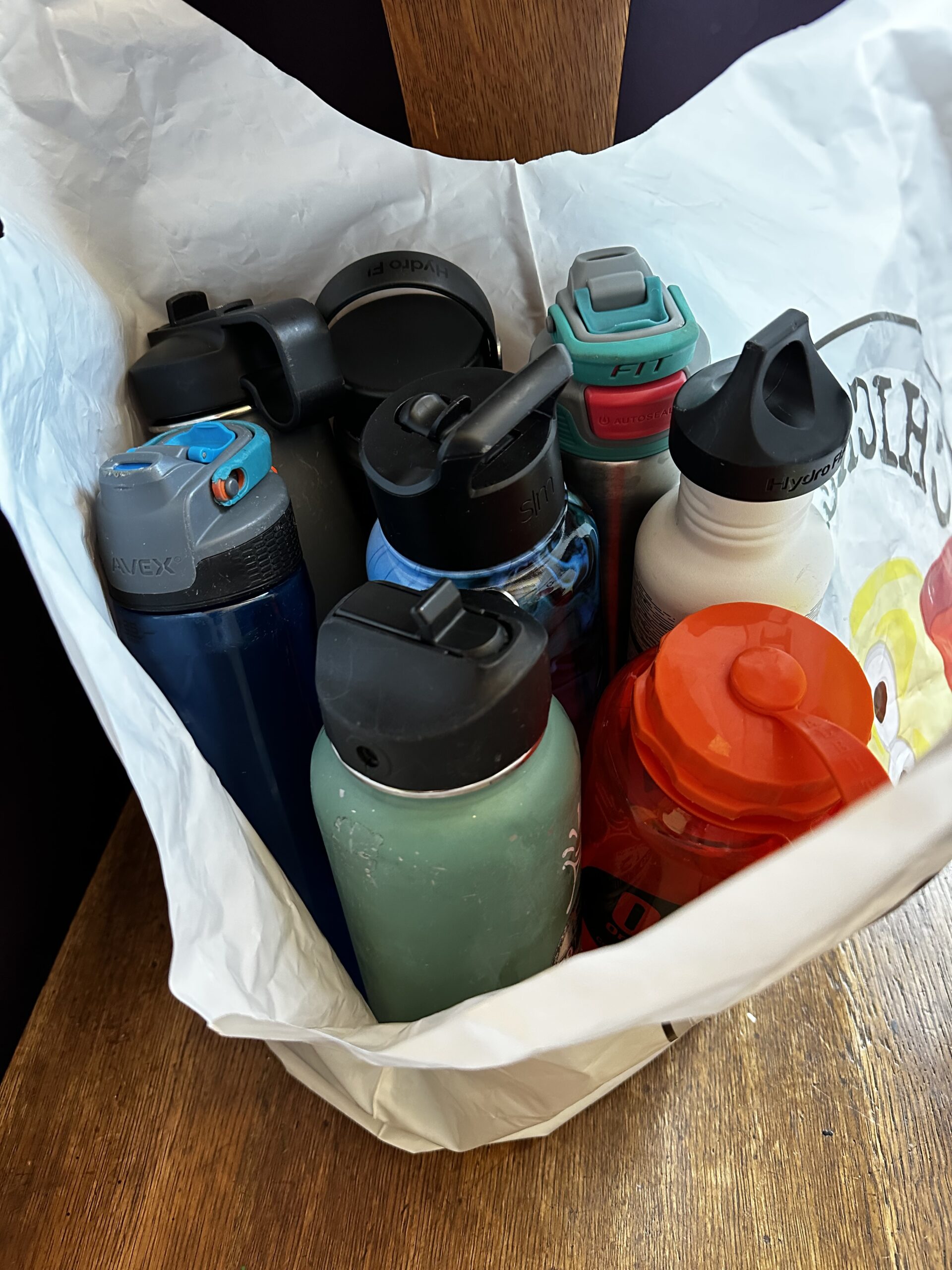
I wrote in yesterday's blog post about how my husband and I gathered our excess reusable water bottles to donate to a homeless services nonprofit who put out a call for them.
Blog readers chimed in about how reusable bottles designed (supposedly) to minimize excess consumerism have accomplished the opposite. You only have to look back a couple years to the Stanley cup craze to understand this point.
"Whenever I look at the inventory at a thrift store or on Buy Nothing posts, I think to myself that all the water bottles we'll ever need have already been manufactured."
My response to this was "Also every ceramic mug."
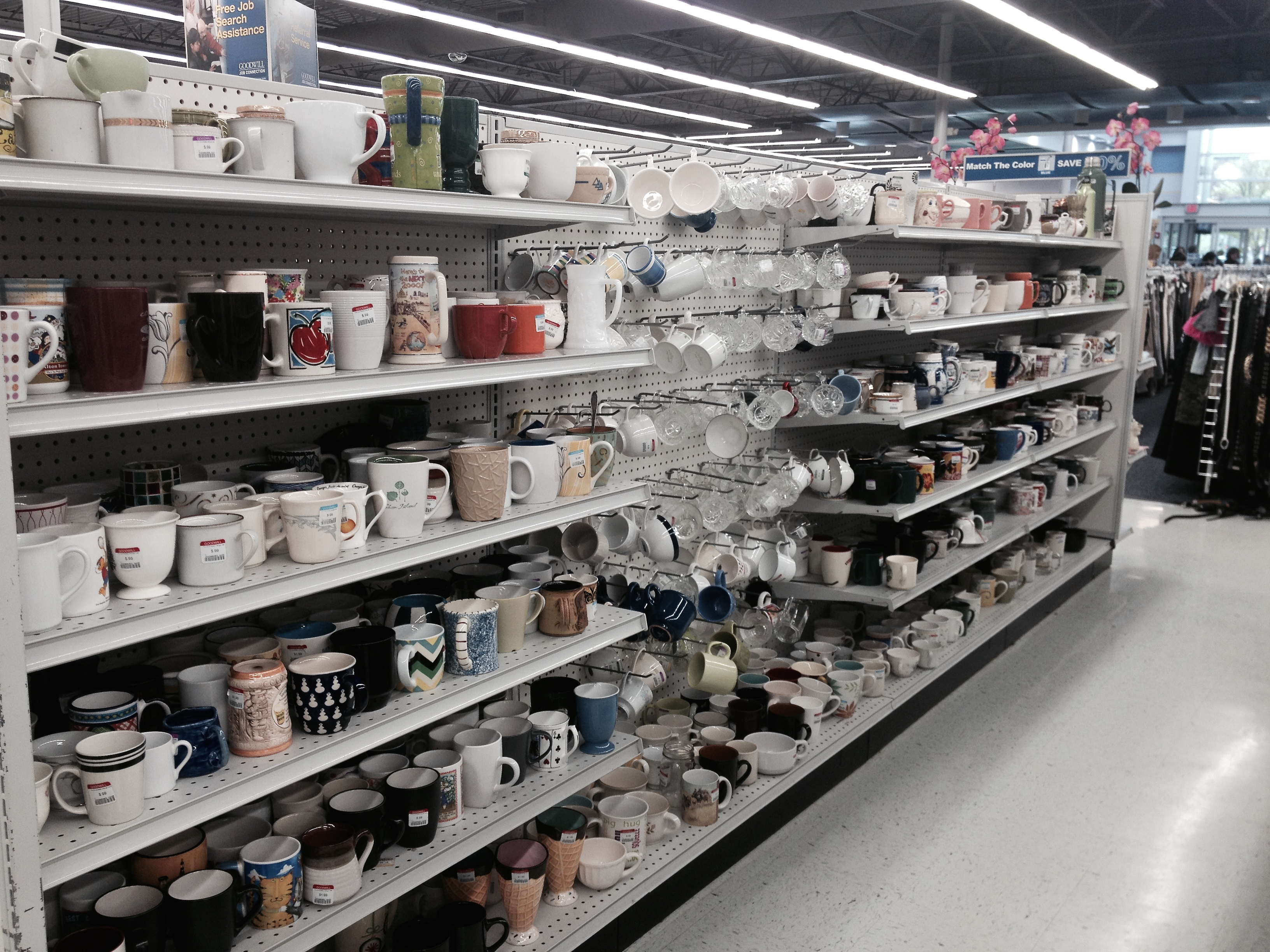
I mean, c'mon . . . it's time to stop manufacturing mugs until all the donated/abandoned ones find homes.
Which led to this comment:
"Stuffed animals. I believe every person should be issued one at birth, and be able to receive one more during his/her lifetime. That's all."
I look back to my childhood and I'd guess that I owned maybe six stuffed animals from ages 0-18. My daughter? By age three she already had enough stuffed animals to fill a Pack-N-Play, although you can probably tell that one of them was a definite keeper.
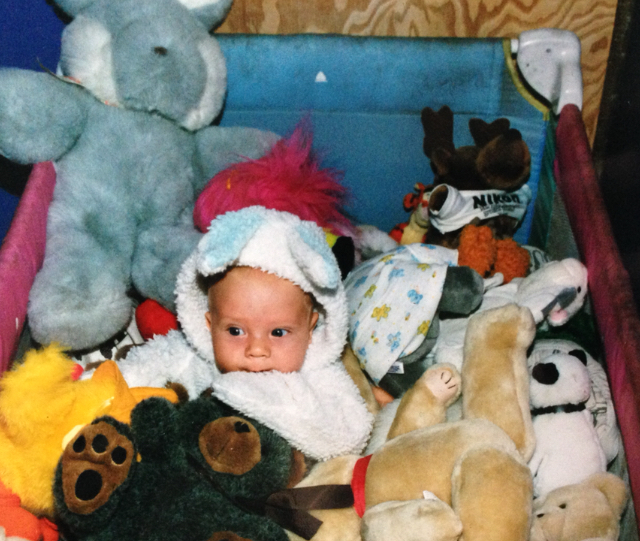
Stuffed animals cram every thrift store shelf that'll even accept them, yet we continue to buy new ones without a second thought.
Mind you, I absolutely understand why people buy them. They're cheap, cute and feed the dopamine cycle of "Ooh . . . something new!"
Pre-2007, I was a normal American consumer and bought almost all our Stuff brand new. I had a decent hourly wage as a nurse and little kids who loved playing with their stuffed animals. Add in a store literally two blocks from the house, selling sold Beanie Babies for five bucks apiece.
This led to a routine where we'd walk to the store, let the kids take their time to pick out their preferred stuffed animal and then bring it home to play all afternoon. It was the perfect solution for potentially bored kids. This unfortunately fed the mentality of "this shiny new toy is better than my old toy" and cluttered rooms. Plus the environmental consequences of overconsumption.
My mind is wondering what other categories of consumer goods are grossly overmanufactured? Clothing, for sure, (especially for women) but also certain kitchenware items such as non-stick pans. They get ruined almost instantly and then thrown away or donated to thrift stores that can't sell them.
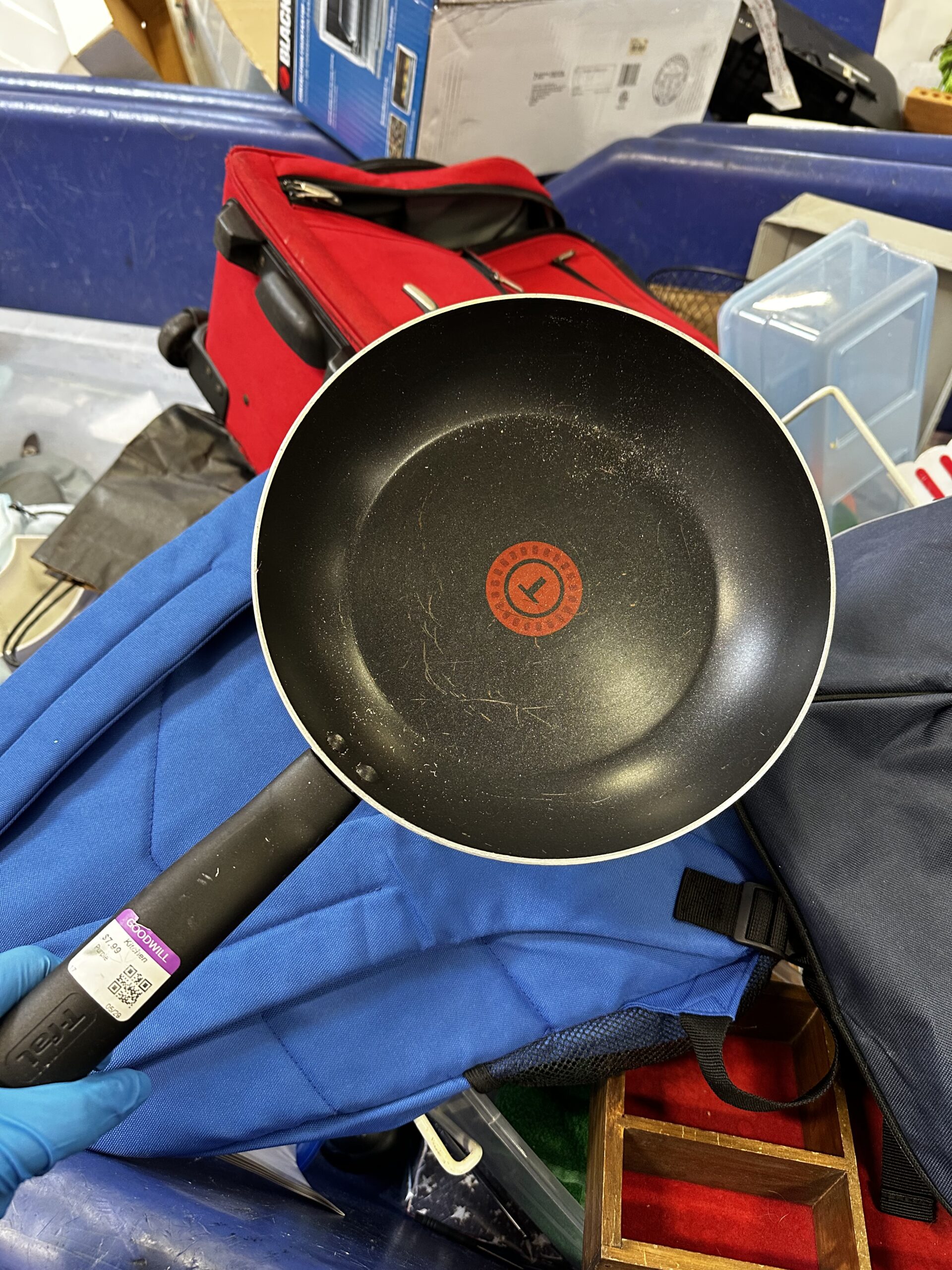
The Goodwill bins are full of them, yet I've never seen one in anyone's cart.
I'm curious what unnecessarily manufactured do you see in the world? What am I missing?
Please share your thoughts in the comments section below.
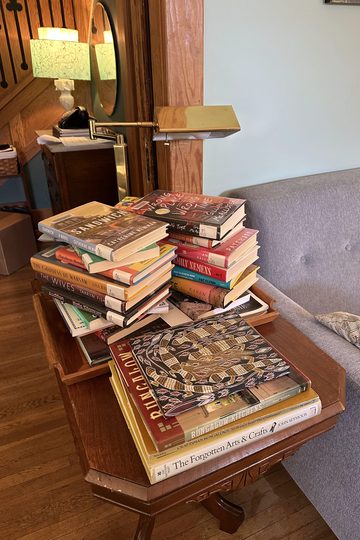
Shoes. Happy meal toys. Barbie dolls and Barbie-like dolls. Cosmetics. Sports equipment. Really just about everything!
I was a kid growing up in the fifties. I had some dolls and stuffed animals, a dollhouse, a record player, some board games and puzzles. I don't remember much else. Now I see kids with so many toys they can't walk across their rooms or sleep in their beds. How did this happen? How did this get to seem normal?
I have a friend, my age, whose whole house is like this, and she rents three storage units besides. I don't get it.
I feel like it would almost be easier to count the things that aren't overmanufactured.
Toys used to be comparatively expensive, mostly made in the USA. Now they're made cheaply in the Far East, so it's easy and cheap to buy them.
I'd never even think of giving my kid a used stuffed animal. Uck.
For example, Barbie cost $3 when introduced in 1959. Now you can probably buy a new one for less than that even ignoring inflation.
I don't think you can get a new one for $3, but I am surprised to see some on Walmart's website for around $6. No wonder Goodwill has bins of them! Naked, of course, the clothes are hard to find second hand.
I just missed the Barbie era -- I felt I was a little too old for dolls when they arrived.
Once the pukes made it tax advantageous to mfg overseas, greed abounded. Mattel moved production overseas "lower mfg cost" yet the price of Barbie didn't decrease. It just gave the upper echelon at Mattel higher salaries and bonuses.
Sad to say all the protections US workers garnered over the years are considered "too expensive" when it comes to mfg in the US.
All I can say is may the end justify the means.
Most stuffed animals can go in the wash. They come out looking fine.
Don't do what I did. I washed my stuffed bunny rabbit in the bathroom sink with my mother's perfume. I got in trouble and the rabbit stunk like old perfume for YEARS.
'Now I see kids with so many toys they can't walk across their rooms or sleep in their beds. How did this happen? How did this get to seem normal?'
This! I don't get it either. I see so many women on social media trying to clean their house. There is stuff strewn everywhere. Why do people live like this? Don't they have any self respect? Who wants to live on a garbage pile?!
I have issues with all the disposable products … paper dish ware, plastic silverware, plastic tablecloths, paper napkins, etc. Yes, you have to wash and clean these items! And, honestly, there are times when I do use disposable products for large family gatherings, etc. In those cases, I try to get compostable items to help the environment a little bit. We wash and reuse plastic silverware, plastic bags, and foil. I recycle the foil (after several uses) and plastic bags. I can appreciate parchment paper. It certainly has a purpose, but for years we all did just fine greasing our baking dishes and pans. Now, directions on so many recipes call for parchment paper when greasing would do just fine. We have more than likely over manufactured “bring your own shopping bags.”
I have issues with disposable party goods too. I almost always use my own dinnerware and silverware when entertaining. I have one party I use paper goods and plastic silverware for but I'm thinking next year I will use my plates and silverware. I have a dishwasher so it's not a big deal when I really stop and think about it. All holidays I use my own plates, etc. so no throwaway stuff there.
We've got a box of event tableware, cutlery and glasses. For 24 people and all from Ikea (OFTAST). When we host more than 8 people, we get use this. Saves a lot of stuff from the landfill and is more appealing to dine from. I got this idea from my stepfather, who was a chef and restaurant manager. He always had a box of robust hotel tableware in his basement for events.
I love this idea!! I do something similar. I have a new set of dishes my husband and I got last year for our wedding, it serves 8. Before that, I had collected correlle pieces over the years from thrift stores. They're thin, fun patterns, and easy to store. So we've hung on to those. I can host about 20 people now!
Our store still sells TY-brand stuffed animals for $4.99, and I understand why kids are attracted to those big eyed stuffies, whether or not they are considered official Beanie Babies. They are adorable. (Even though I agree there are far too many of them!)
What I absolutely don't get is this squishy fad. The kids are nuts about squishies that cost $5.95 or more and the stupid things don't do a darned thing. They have no useful purpose at all. The kids want them because their classmates have them and they constantly call our store asking if they're in stock We've sold out several times. I just don't get it: why would anyone want one of those stupid things? (Peer pressure and parents who won't say no....)
Another thing I never understood was why do little girls need 8 or 10 Barbie dolls? I had a Barbie and later a Midge (Barbie's same-sized friend who could wear her clothes) and a Skipper (Barbie's flat-chested kid sister who couldn't), but that was it. Now I see kids with dozens of Barbies that all look alike. What's with that?
Lisa, your Barbie and friends memories just jarred loose some of mine. My first BFF--my next-door neighbor who was exactly 12 days younger than I was--used to pool our Barbies, Kens, Midges, and Skippers (she and I had one of each) into hours of fun. I recall with special fondness our using all these, plus assorted smaller dolls (including a Native American doll--hey, we didn't discriminate!) in our own doll version of The Sound of Music. I doubt whether the Barbie collectors of today are doing anything this creative. (And I'm very happy to report that this BFF tracked me down on the Internet several years ago, and we've kept in touch ever since.)
We had similar communities of dolls we referred to as "Barbies", but they went far beyond just the Mattel version, with all sorts of named- and nameless- large and small peoples.
I read something once about Barbie that I should have realized long before. Barbie was an adult (ignoring her figure), and playing with Barbie was practicing being a grown-up. That meant a lot of creative play for my sisters and I.
Don't forget Scooter!! But maybe she is more of a mid to late 60s doll.
@A.Marie and Lisa --this also brought up my childhood Barbie memories! I had a "quick curl" Barbie, and a "dancing" Ken...then I got a Barbie camper for Christmas in 1973 or so, and a Planet of the apes action figure--- they all went camping together! HAHAHAHA-- No discrimination here either!
Lol. My friend's little brother had a GIJoe we kidnapped to use as Barbie's boyfriend. When you don't have a Ken, you have to get creative.
Yeah, I played with the same couple Barbie and friends. Now I go into thrift stores and see these bags of naked Barbies. I once read something like if you put all the world’s Barbies head to toe they would circle the world once or twice. I often have a weird fantasy of buying a bag of them, cleaning them up and making clothes for them. Maybe they could be reused. I know, a supposedly sexist toy, but I don’t think I was damaged too badly…
Cheesy word art. “Live Love Laugh”. (Gag!)
Fleece blankets.
Tote bags.
Throw pillows.
Holiday decor.
Gift bags.
Mini dash waffle/pancake/sandwich makers.
Pillowcases.
Tote bags.
Great list! I have a Goodwill Dash waffle maker and I love it. I can make dozens of freezer waffles for pennies and never buy frozen waffles. Everything you need is in the Goodwill, you just have to be patient.
So do I! I love my mini waffle maker, but we must be the only ones. Every time I go to goodwill, I see tons of them on the shelf with the crockpots and the George Foreman grills!
I have a regular size waffle maker I bought at a yard sale years ago. Still works great too.
I always say if you want the latest fad (Dash min-whatever maker; Stanley cup, etc) just know in a year there will be a shelf full at the thrift store!!!
Yes, GAG to the cheesy wall art! Why do we need a sign to tell us where to eat?!
Costume jewelry is way out of hand. The thrift store at my church is overflowing with it. Someone buys a piece or pieces of inexpensive jewelry to go with a certain outfit and when the outfit is out of style or doesn't fit anymore, where does all that (mostly plastic) jewelry go? Glutting up our jewelry cases, to a donation center or worse...to a landfill.
Baby clothes - they outgrow them so fast, that if everyone just passed them around we'd never need to manufacture them again.
Wedding dresses and veils! The thought of having a dress for the ceremony, one for the reception, and one to jump into the lake during the post-reception stuns me.
Although I completely agree about over-production, I do think more and more attention is being paid to the issue. But my attention might be selective.
I rarely see commercials for children's fast-food now, but I get the impression that Happy Meal Toys are less of a big deal, (going along with making the food healthier).
Less useless swag, (key chains), at conventions and businesses.
Fewer "this event gives you a cheap t-shirt" events.
Remember the giant chunks of styrofoam that used to line every package? Or even packing peanuts?
France is working on legislation to ban or limit fast fashion websites like Temu. It is tangled up with EU commerce requirements.
I would add, though, the related planned obsolescence of items, (like my laptop that couldn't make the leap to Windows 11), as a great waste. Again, legislation is variously proposed to make things repairable, make parts available, etc., though that is a slow battle.
Love the baby in the stuffed animals photo!
I agree with everyone's comments. I was just thinking the other day I wish they would quit making ink pens. It's like the ink pens at work and home have babies while I am sleeping. Which then got me thinking about all the give away advertising garbage that gets handed out at conferences, events, and sent in the mail...like more ink pens, refrigerator magnets, key chains. Just so much stuff that's not needed.
The sad thing is that many pens are not going to where they are needed. I once invited a friend to a convention held in her city, as I was getting an award and could invite a plus one to the fancy dinner and program. We had to walk through the conversation center display area where all these drug manufacturers were handing out bling to hospital officials. When our event was over, Donnie wanted to grab some of the items, but by then the marketing folks had packed up and left. Donnie taught school in a San Antonio barrio and could've used all those pens, pencils and other stuff in the classroom. So many of those kids had families who couldn't afford to outfit them with basic school supplies. But all that stuff got thrown away.
hmmmmm I wonder if this is (or could be) a nonprofit that connects places with an abundance of these types of supplies with schools in need.
Donate extra pens to your favorite waiter or waitress
Christmas clothes AND Christmas pajamas. Ugh.
Yes! Holiday decorations are insanely overproduced.
I was raised on a farm. I had a few barbies and a Barbie horse. I made furniture and a barn for barbie. My daughter inherited my barn, Barbie & horse. I had a Steif bear, an antique dog stuffy that was life sized and a walrus. I was gifted a reading lamp. A bookcase, books. My daughter collected Breyer horses, until she was 10, then she wanted the real thing.
Grandparents gave experience gifts and college fund money. Begging the parents of daughter's friends to not bring gifts just a homemade card.
Fine China. My daughter, 41, has two sets of China. She started having dinner parties in college and still has one per month, Frugal food on pretty plates.
Wine glasses. The boomer generation has slowly stopped drinking and donated their wine glasses. Three wineries in my area are for sale.
Tupperware and all plastic containers. My own personal conundrum is floss pickers. I use them on my mom, when I floss with floss, my fingers get bit.. I hate them, but use them.
Ditto to every item Li listed!
Outdated tech and power cords.
The baby photo is so stinkin' cute.
Event t-shirts. I came to hate those things when the university department I worked for would not buy us office supplies but made the staff wear new event t-shirts few weeks.
How about those gifts for years of service with your name plastered on them so you can't even give them away! I'm looking at a clock now!
We pried the plaque off my dad's 25 year clock and sold it at mom's estate sale. I still have the tiny metal plaque.
Yes! My husband got a silvery picture frame with his name, dates, and employer on it. What kind of photo does one display in that? His own headshot, on the shelf at home?
I got one overtall wine glass with the same info painted on it. Looked like a bad prom souvenir.
I got one of those too, and had the same dilemma. But it is sterling from Tiffany's and no way I wasn't gonna use it, so I slipped a picture of my son in.
Cereal! I know it's a consumable item but do we need an entire aisle filled with all different flavors of cereal? In my mind the answer is no. I used to work for one of the two major soda manufacturers and I know there is a lot of waste during the manufacturing process and a good majority of the cereals are not nutritious.
I feel this way about all the food and personal care items. How are there 40 different kinds of toothpaste? It is so overwhelming to just go and buy food most of the time. Does anyone really need all of those choices?
We have traveled the world quite a bit and I have noticed there aren’t as many overwhelming choices in other countries. For instance, in Sweden, there were like two types of toothpaste in the pharmacy. The one we got seemed high quality. Some Canadian friends told us they couldn’t believe how many different brands of yogurt in our grocery stores.
Oops supposed to be Beth K . My senility haha??
Crappy plastic lawn chairs.
Cheapo party favors for kids, goodie bags, and slap bracelets...grrrrrrr!
Book bags and lunch boxes. Since when do you need a new one each year????
Boys jeans, bring back tough skins!!! Definitely sound like my Mom now 🙂
Hand tools with crappy fiberglass handles......booo!
Yeah, I recently learned that many parents purchase new lunch boxes and backpacks every year. I’m in a family minimalist group and someone mentioned she was washing up the bags and told her kids they would be reusing them again next year—previously they got new bags every year—and people were cheering her on and were considering doing the same. I get that over time needs change, tastes change, body’s grow. But every year?? It never dawned on me to get my kids new bags every year. I can’t believe people really do this! When my kids started preschool they each got a nice quality 100% cotton backpack and lunch bag that wash up beautifully. My children will be using their backpacks until they grow out of them! They also use them for when we take trips and go hiking. It’s useful to have one good bag. The lunch bags are not age specific, so they can use those forever.
My young grandkids like the squishmallows and have a couple they go to bed with,play imagination games with them, doesn't matter if they look different than a doll, they're still stuck in a chair for tea parties and used as a ball to toss around without getting hurt since they're not great at catching and I don't worry about anything breaking, etc. They don't collect them but rather enjoy and use a few. I don't think they're all that bad.
Overproduced items in my mind in addition to many listed already are so so much holiday decor, candles, cheap wall decor, new junk food items that are trashed quickly and promotional materials, tshirts/bags etc for events.
Disposable diapers are the worst. I actually used a diaper service for my babies years ago. The diapers were so soft and smelled good. Sterilized. And we never had problems with diaper rash.
Where, exactly, are all these used disposable diapers ending up?
I used cloth diapers too. Back in 1982 when I had my first child I remember learning there was a floating Pamper island in the Pacific ocean. Also, someone in my nursing class did a comparison study on the price of disposable diapers and cloth diapers. I don't remember the actual cost ratio but cloth diapers were less expensive. With that information, I chose cloth diapers. Two early lessons in economics and ecology.
Did you read that France is cracking down on "fast fashion":
https://www.msn.com/en-us/money/news/france-passes-landmark-law-targeting-ultra-fast-fashion-giants-like-shein/ar-AA26P9DF?ocid=BingNewsSerp
When I read the title of your blog, my immediate reaction was "rhetorical question".
Given the current state of our economy, my only hope is people quit buying crap (my term) and scout out pre-owned. But I fear they won't have the time given most are working two, some times three, part-time no benefit wage slave jobs.
what happened in 2007 to change your thinking? Was it the compact? And why did it appeal?
Pet toys and clothing. There’s an astonishing amount of it in stores.
The director at my library wants to add a makerspace with 3D printers. I hate all the plastic garbage being pumped out with 3D printing. I get if you need to make a part, but they are making plastic toys and trashy decor. I told her I couldn't support a makerspace.
Magazines. We don't need 37 different magazine brands with 49 pages of glossy advertisements telling us what we need to do, buy, take, and be just so we can see 1/3 of a page of an article that's only mildly interesting at best.
At my last job I worked in the front office of a doctor's office and we used to get so many magazines, and often duplicates of the same magazine, that if someone asked if they could copy or cut something out of one we would tell them to take the whole thing.
Yes, it would be easier to list what's not over-manufactured. We seem to have lost our way and overdo a lot of things in general, which end up creating more stuff, costing more money, using more of the Earth's resources, requiring more time and energy, and adding more stress. One really random example prompted by Heidi Louise's mention of wedding dresses: Save the date cards sent to everyone who will receive a wedding invitation. But then I don't understand much of what goes on with some weddings. Bachelorette weekends? Wedding favors? Choreographed dances? Destination weddings? Oof.
There are some brides who are doing the best to minimize the impact of their wedding which includes my daughter. Yes, she did buy one wedding dress but is not having a veil. Save the date was sent via text/email and her invitation was one card with the RSVP being online. We did the RSVP for any older relatives who are not comfortable going online. She bought a wooden plaque at Dollar Tree for the ring bearer to hold. When I commented that it would be cute to say (groom's names) Here Comes Your Bride she said no Mom I want to be able to pass it on to my friends to use so no personalization. She is also having table decorations and bouquets that are made of paper flowers and can be given to her friend who is getting married next year. The reception and photos will be at the church so no need for people to drive extra places.
I wore a thrifted wedding dress back in 1996. I was ahead of my time! Also, I refused to have “favors”, a program (does anyone not know what’s going to happen at a wedding?), and a unity candle (they don’t light half the time anyway, which seems like a bad omen).
Nancy, I love hearing of all of the smart things your daughter is doing! I recently received a wedding invitation where I need to scan the QR code to RSVP. I've never done that before, but I'll figure it out. The wedding and reception are being held on the grandparents' property. The last wedding we were at was completely over the top, so we're looking forward to a more casual celebration. If there are wedding favors, we will conveniently leave ours behind.
Great, mindful thinking and planning on your daughter's part. I wish her and her future husband many years of happiness.
Makeup! It has taken me almost two years to use up an eyeshadow palette - and most people I know have a dozen of them! Once I decided to only have a basic make up set up I was blown away by how little I actually need. Most of people's makeup goes bad and goes in the trash.
Holiday decorations are another one. We got rid of so much when we moved and have decided whatever doesn't come out next year is going to be donated or recycled. How on earth did we go from putting up a tree and hanging up a few stockings, or putting up a few pumpkin decorations to changing all the towels in the house and decorating entire rooms in holiday decor???
On and on it goes. When will we ever learn?
My initial answer is…..everything!!!
Reusable bags and swag/freebies. Freebies mostly get tossed in the garbage unused unless it’s a company you are passionate about and don’t mind displaying a logo. Reusable bags are very easy to “collect” but how many are really used? 4 or 5? I see both of these types of items at the bins every time I go.
I'm a huge fan of reusable bags simply because they get USED so much - a regular grocery shop will use 2 or 3, but I also use them to shop at other stores, to store things that are destined for another household in my rotating households of useful things, to gather glass jars for shifting to the basement, or library books, or a collection of foods heading down to my mom's. My daughter or son might come by and I will send home with a bag of garden produce, a bag of their old books (little by little) a bag of hand-me-down clothes provided by a friend, etc etc. Then those bags come back to me but it might be 2-3 weeks, so I personally am a fan of having a lot of them. They do rotate, though! and I laugh at the advertising on some of them - clearly bags passed on to me from friends or family because I have never been there nor purchase that product!
Hair clips and accessories. Makeup. Kitchen unitaskers. Throw blankets. Holiday decor.
Nearly everything! No matter what I need, I can find it secondhand (usually with dozens of options to choose from!).
Our local thrift store shelves are often so crowded they place things on the floor as well, namely: reusable water bottles, small plant pots, vases, mugs, glass drinking glasses. The racks are so jammed with clothing you can hardly slide the items to look.
When I was a kid in the 60's I don't remember there being a card & decor for every little occasion. People did not decorate their yard w/ Halloween lights, Valentine's decor, etc. The manufacturers & card companies have jumped at the opportunity to make every holiday (major or minor) a merchandise event. Since most people do not subscribe to a newspaper then that paper wastage has stopped. I suspect most magazines will be online too at some point. Less paper going through the mail for billing also. A few victories for less single use items.
My mother worked for a florist and she used to say some holidays were pushed onto the public by FTD and Hallmark to get people to buy flowers and cards. Sounds true to me.
I think so much of what we have access to in these modern times is overproduced plastic garbage that is going to end up in a land fill. We try to avoid buying cheap stuff but it’s impossible to avoid these days…last year we had to purchase a pressure reducing valve for our hose timer and the only available product at the store is made of plastic. No surprise - it broke last week. Luckily I was there when it happened, otherwise our water bill would have been astronomical.
My antidote to overconsumption is to frequent art museums…. it helps me to be reminded that an intricate jade bracelet from 300 years ago is part of our human cultural identity, not the cheap plastic bracelet that was mass produced.
So if I’m tempted to impulse-buy a cheaply made chair or trinket, I remember to focus on quality. And since high-end quality pieces are usually out of my budget, I don’t end up buying that chair or trinket. Problem solved 😉
Do you really know it got thrown away? In my career, I packed up my company-issued swag and used it at the next show and the next one.
My item: Q-tips, or generic swabs. You can buy a package of 300 or a travel pack of about 20 for the same price. Stoopid.
Funny you mentioned this as I recently need to by q-tips and ended up paying more for the smaller package! Not frugal perhaps. But we don’t use q-tips often and I don’t want to have to manage 300, which would last us years. In general, for items we don’t use much of, I’ve started choosing to pay a higher unit price for a smaller package so that I have less inventory to manage and remember. I just don’t want to bring more stuff into the world unless I’m confident we need it and will use it up.
Vases!
I grew up in the ‘60s. I had one stuffed animal, from the S&H green stamp store. I was given the choice of it because I was going in hospital. I still have it, in a hat box. My two sisters and I were given one Barbie doll (each different). We still have them. My Father worked two jobs, but we were very poor, as my mother’s medical bills were enormous after her neck was broken when someone rear ended us. I guess for us, consumerism wasn’t happening because we just didn’t have the money.
Reusable grocery bags. Race T-shirts and swag. Swag in general - so many pens.